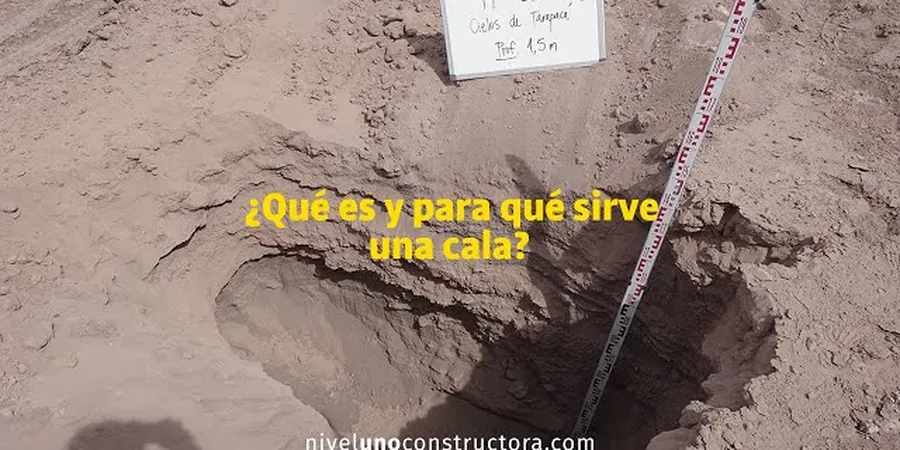
Montreal's downtown core sits on a geological puzzle. The old city grew atop limestone bedrock, but expansion pushed into the St. Lawrence lowlands where sensitive Champlain Sea clays dominate. Every foundation here tells a story. An exploratory test pit strips away the guesswork. We open the ground and document the strata directly. No indirect signals. No assumptions. Just the soil profile as it really is. For projects near the Lachine Canal—where fill depths can exceed four meters—this visual confirmation becomes the difference between a smooth excavation and a costly surprise. Our crews have logged hundreds of pits from Ville-Marie to Pointe-aux-Trembles, and the lesson is always the same: Montreal's glacial legacy demands eyes on the material before shovels hit the ground. When borehole samples seem ambiguous, we often pair a test pit with grain-size analysis to resolve the fines content debate right on site.
A single well-placed test pit can rewrite the geotechnical brief for an entire city block in Montreal's clay belt.
Service characteristics in Montreal
Critical ground factors in Montreal
A developer in Rosemont planned a five-story condo on what the old maps called competent till. The first pit exposed three meters of undocumented fill—brick, cinder, and organic silt—right where the footing was drawn. That changed everything. The structural load had to reach competent clay, so the foundation design shifted to a mat-foundations solution with a thicker slab and tighter settlement tolerances. Without the pit, the first sign of trouble would have been differential cracking before the building was even closed in. Montreal's older neighborhoods conceal a century of buried basements, backfilled streams, and industrial debris. A test pit is cheap insurance. It puts the real ground in front of the engineer before the rebar is ordered. For any project east of Papineau or near the old port, we recommend at least two pits at opposite corners of the footprint.
Our services
Every test pit we open in Greater Montreal is logged by a geotechnical engineer who understands the regional stratigraphy. The service is not just about digging a hole—it is about interpreting what the walls reveal and delivering a report that the structural engineer can act on immediately.
Urban Test Pit Investigation
Machine-excavated pits with continuous logging, in-situ density checks, and bulk sampling for laboratory index tests. Includes a factual report with photographs, stratigraphic columns, and groundwater observations.
Combined Pit & Borehole Package
Paired test pit and SPT borehole at the same location, ideal for calibrating N-values against visible strata. Saves time on large lots where the soil profile varies across the footprint.
Frequently asked questions
How long does a test pit stay open in Montreal's winter conditions?
We schedule pits for same-day closure whenever possible. In freezing weather the pit is logged, sampled, and backfilled within six to eight hours. If overnight exposure is unavoidable, we insulate the walls and place warning barriers. Spring thaw requires extra care; we often use a quick-compacting crushed stone backfill to prevent settlement when the ground refreezes.
Is a city permit required for an exploratory test pit on private property?
Yes. Montreal boroughs require an excavation permit, and we manage the application as part of the service. The process includes a traffic control plan if the pit is near the sidewalk, and a locate request for underground utilities. Turnaround is usually five to seven business days.
What does a test pit investigation cost in the Montreal area?
Most urban test pits in Montreal fall between CA$700 and CA$1,240, depending on depth, access constraints, and the number of samples collected. Complex sites with heavy traffic protection or hydro-vacuum potholing add to the mobilization cost.
Can you collect undisturbed samples from the bottom of a test pit?
Yes, we routinely push thin-walled Shelby tubes from the pit floor to capture the intact clay structure. For sensitive Champlain Sea clays, these samples go straight to the lab for triaxial or consolidation testing. The pit walls themselves give us the macro-scale layering; the tubes preserve the micro-structure.
How do you protect workers in a deep test pit?
Quebec's CNESST regulations govern every pit we open. Up to 1.2 meters we can work without support if the soil is stable. Beyond that we either bench the walls at a safe angle or install a certified trench box. A trained spotter stays outside the pit during the entire logging operation.