Montreal's subsurface doesn't read textbooks. Within a kilometer, you can transition from dense Lodgement Till over bedrock on the island's higher terraces to the soft, hypersensitive Leda Clay that underlies much of the low-lying areas east of the city center. Running a Standard Penetration Test here without adjusting for that variability produces N-values that look clean on a log but miss the real story. The Champlain Sea deposited these silty clays roughly 10,000 years ago, and when undisturbed they can hold a 12-story structure; remold them during sampling and they flow like heavy oil. Our field crews track blow counts every 150 mm through the split spoon, not just the total N, so the geotechnical engineer can spot a thin sand lens or a desiccated crust that changes the foundation design entirely. In a city where winter frost can reach 1.5 m depth and spring thaw saturates the upper clay, getting the SPT right means drilling through conditions that shift with the seasons.
An uncorrected SPT N-value in Montreal's Champlain Clay can underestimate settlement by a factor of two if overburden pressure and groundwater aren't accounted for in the design.
Service characteristics in Montreal
Critical ground factors in Montreal
A six-story residential project on Sherbrooke Street East ran into trouble when preliminary SPT refusal at 6 m was interpreted as bedrock. The contractor priced the excavation assuming a standard mat foundation. During construction, the excavator hit a large glacial erratic boulder perched within the till—not bedrock—and the actual refusal depth was 13 m below that boulder. The revised foundation required drilled shafts socketed into the real rock, adding six weeks and a significant change order to the schedule. That single boulder, undetected because the first SPT blow count jumped from 18 to refusal in one interval, changed the entire substructure cost. In Montreal's glacial terrain, isolated cobbles and boulders are common, and a single SPT refusal reading should trigger offset boreholes or a complementary CPT sounding to confirm whether the refusal is continuous rock or a random obstruction.
Our services
Our SPT program in Montreal covers the full workflow from drill rig mobilization to corrected N60 logs, with in-house drilling crews who understand the island's stratigraphy and a laboratory accredited to ISO/IEC 17025 for follow-up classification and strength testing.
SPT Borehole Drilling and Sampling
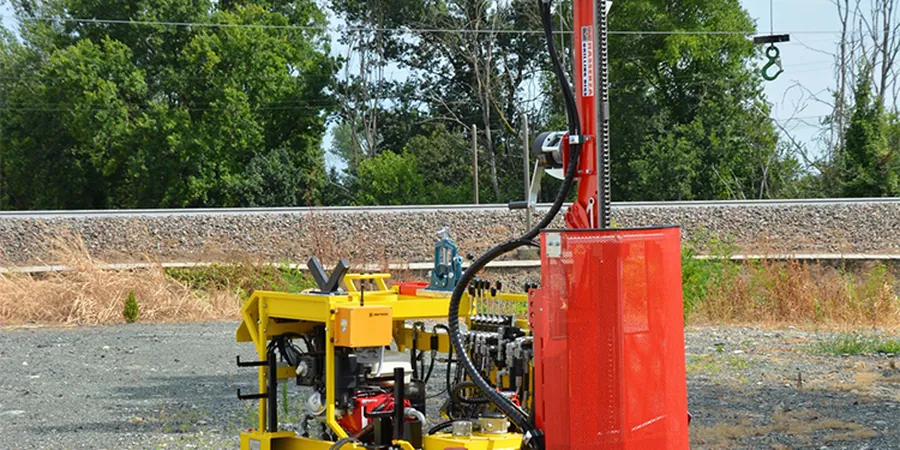
Track-mounted and limited-access drill rigs for urban sites. Continuous SPT sampling through Champlain Sea clays, tills, and weathered rock, with split spoon recovery measured at each interval.
N-Value Correction and Site Classification
Energy-calibrated N60 correction including overburden, rod length, and borehole diameter factors. NBCC seismic site class determination (A through E) per Table 4.1.8.4.A using corrected blow counts and shear wave velocity cross-checks.
Integrated Geotechnical Reporting
Complete borehole logs with USCS soil descriptions, groundwater observations, and preliminary bearing capacity estimates. Reports include SPT-based settlement analysis and recommendations for shallow versus deep foundation alternatives.
Frequently asked questions
How much does an SPT investigation cost for a typical Montreal residential lot?
For a standard single-family lot with two boreholes to 10 m depth, including mobilization on the island, drilling, SPT sampling at 1.5 m intervals, and a factual report with logs and groundwater readings, the budget range is typically CA$770 – CA$990 per borehole. Sites with difficult access, deeper refusal, or continuous sampling requirements will fall toward the upper end.
Why do SPT N-values in Montreal's east end clay come in so low compared to other cities?
The Champlain Sea (Leda) Clay deposited across eastern Montreal is normally consolidated to lightly overconsolidated, with natural water contents often at or above the liquid limit. Uncorrected N-values of 2 to 5 are common in the upper 15–20 m. The clay's sensitivity can exceed 30 in some zones, meaning disturbance from the drilling process itself can reduce penetration resistance further. Proper mud rotary drilling and careful spoon driving help preserve the in-situ structure.
How deep do SPT boreholes need to go for a mid-rise building in downtown Montreal?
Typically 20 to 30 m, or until three consecutive SPT intervals show refusal (N > 50) in competent rock. Downtown sites near the mountain often hit limestone or shale of the Trenton Group at shallow depth, while areas closer to the river may require deeper drilling to pass through alluvium before reaching till or bedrock. The NBCC requires boreholes to extend below the zone of significant stress influence, which for a 10-story structure on a raft foundation can mean 1.5 to 2 times the foundation width.
What's the difference between raw N, N60, and N1(60) in your Montreal SPT reports?
Raw N is the total blow count recorded in the field for the final 300 mm of spoon penetration. N60 corrects that raw value to a reference hammer energy of 60% of the theoretical free-fall energy, using the measured or assumed energy ratio of our automatic trip hammer. N1(60) goes a step further: it normalizes N60 to an effective overburden pressure of 100 kPa, which is critical in Montreal's soft clays where overburden correction factors can exceed 1.5 at depths below 10 m. Our reports present all three values so the designer can apply the appropriate correlation.